









CO-AUTORI: Marius Cătălin Moga, Martha Moroșan, Dan Paul, Luana Cărămidaru, Maria Opriș, Teodora-Delia Bîzgan, Romina Vornicu, Larisa Jula, Vlad Cicea, George Ștefan Vaida
COLABORATORI SPECIALITĂȚI: Maria Opriș – peisagist
GREEN COMMUNE
The city is growing into its own shell until it fits it no more. Sheding it means overflowing onto the surrounding space, swallowing it whole. The outcome is unpredictable without an overview, and it cares not about the memory of the place, the soft needs of an idividual, about the community or spaces in which nature can coexist with humans.
The former industrial platform may be undrestood as such a space reserve in a chain of few others, a latent potential of a radial concentrical connections interlinked to the busy hastle of the citadel center. Looked at at a macro scale, the site is placed on a blue-green eco corridor, a potential green belt, inside a densely-planed and heavely-built neighborhoods of the surroroundings. The nearby developments lack consideration of public spaces, community functions, education facilties, diversity altogether. The stress on this valuable asset is great. Taking advantage of al the relevant characteristics of the site in the context of the city, speculating that similar strategies will follow for other sites that are alike, we imagined Rulmentul as a redesigned center for a future descentralised Brașov, a versatile and more complex garden city.
Thought of to be experienced on a human scale, the proposed infrastructure prioritises pedestrian and green vehicles to motorised ones, excluding the latter as much as possible and facilitating acces from the central train station through a railroad network. On the long-run, there may be a posibility of a connection to the coresi development and Tractoru park on an axes of green, pedestrian walkway. Over the Timiș river, accesed by foot or velo, lies another potential park with two hills of existing and proposed vegetation. Hiking up or mountainbiking circuits lead on top to a lookout point.
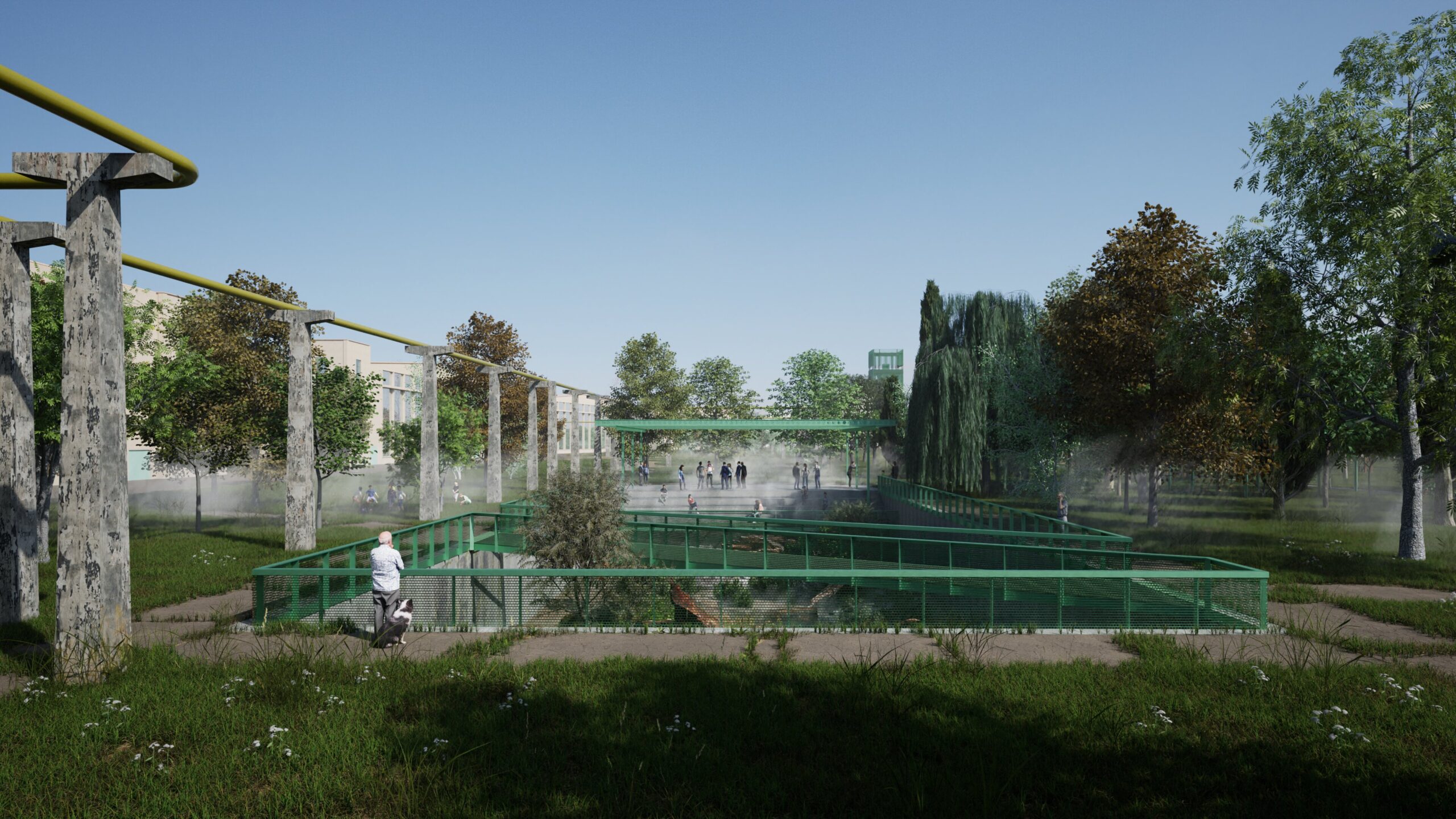
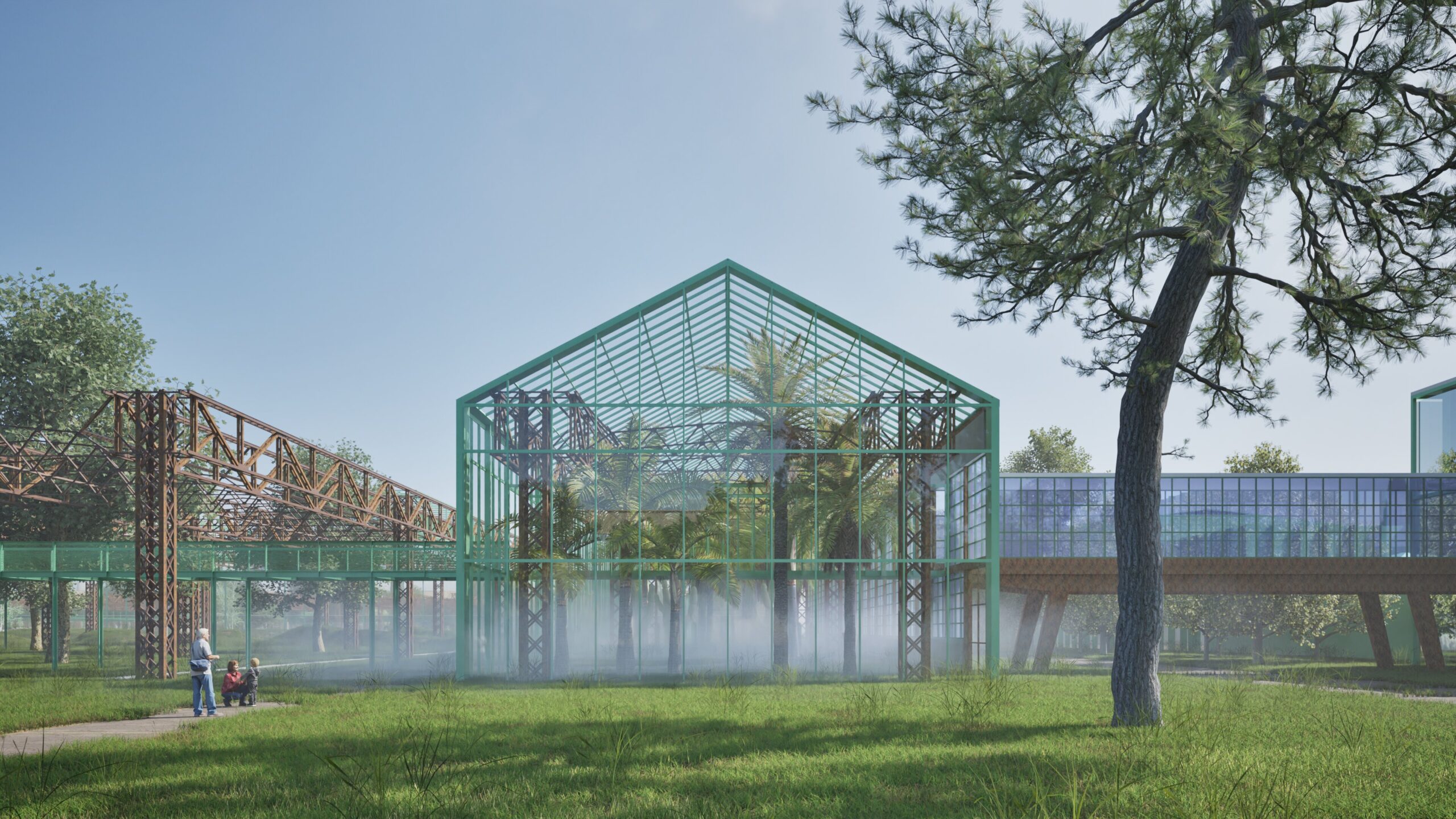
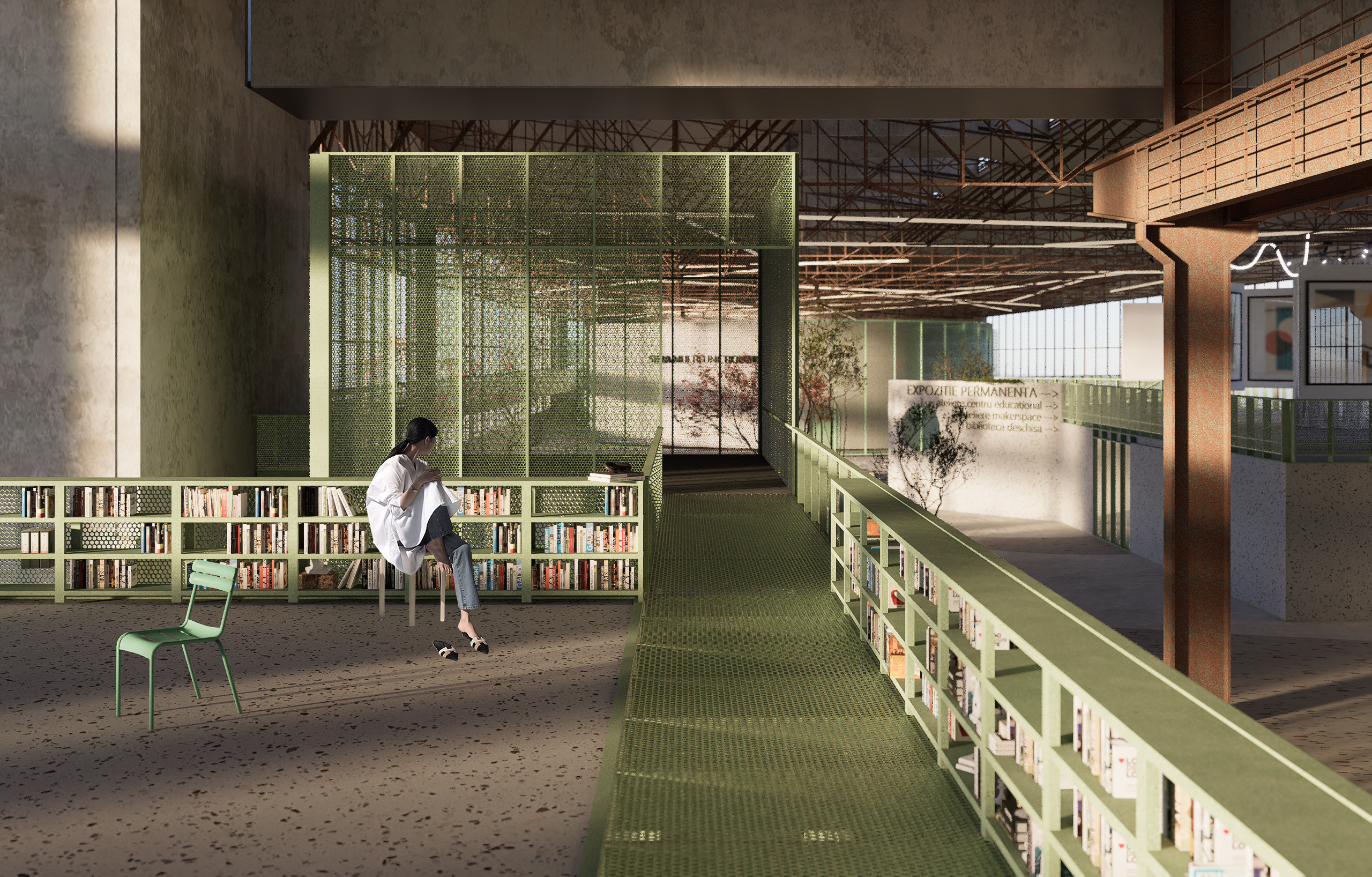
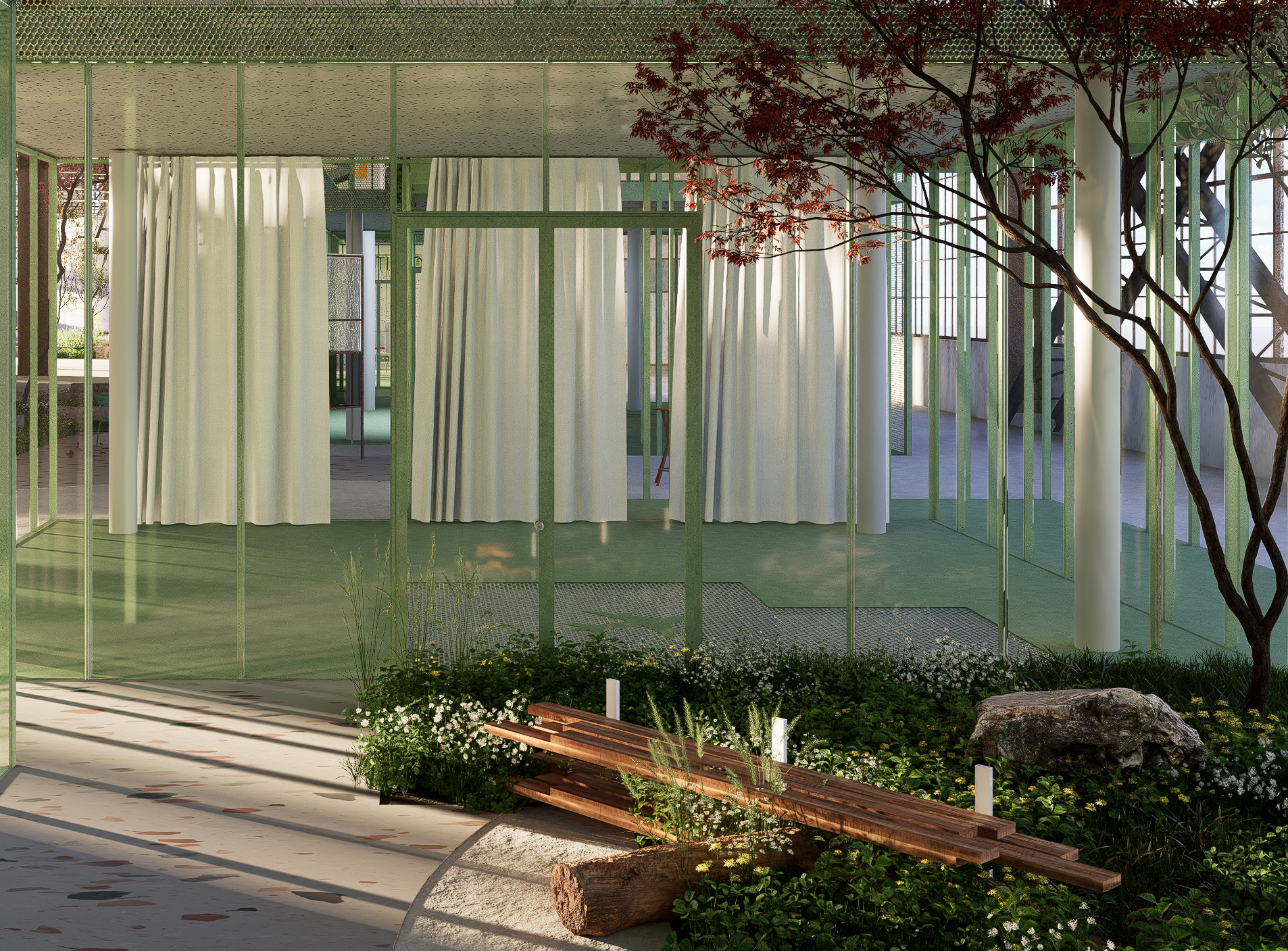
With an adaptive reuse in mind, elements from one place migrate onto another and displaced minced concrete from the pavement becomes base for renaturalised river banks or other landscape elements. In the spirit of genius loci, emblematic structures of the former industry find new functions and meanings. Small industrial structures can define the personality of a square, heavy metal elements present within the preserved built environment are statements of the “glorious” past, and uncovered underground networks vascularize the public space with a cooling and rainwater collecting system. Encompassing islands of innacesible vegetations and biodiversity, the site shifts from mineral to vegetal as one goes inward and from cartesian to organic whilst geting close to the riverbed. The outlined pedestrian rectangular grid aims to carry out a dialog between old and new, amid an industrial past and a more leisurely present, that is transforming the urban fabric.
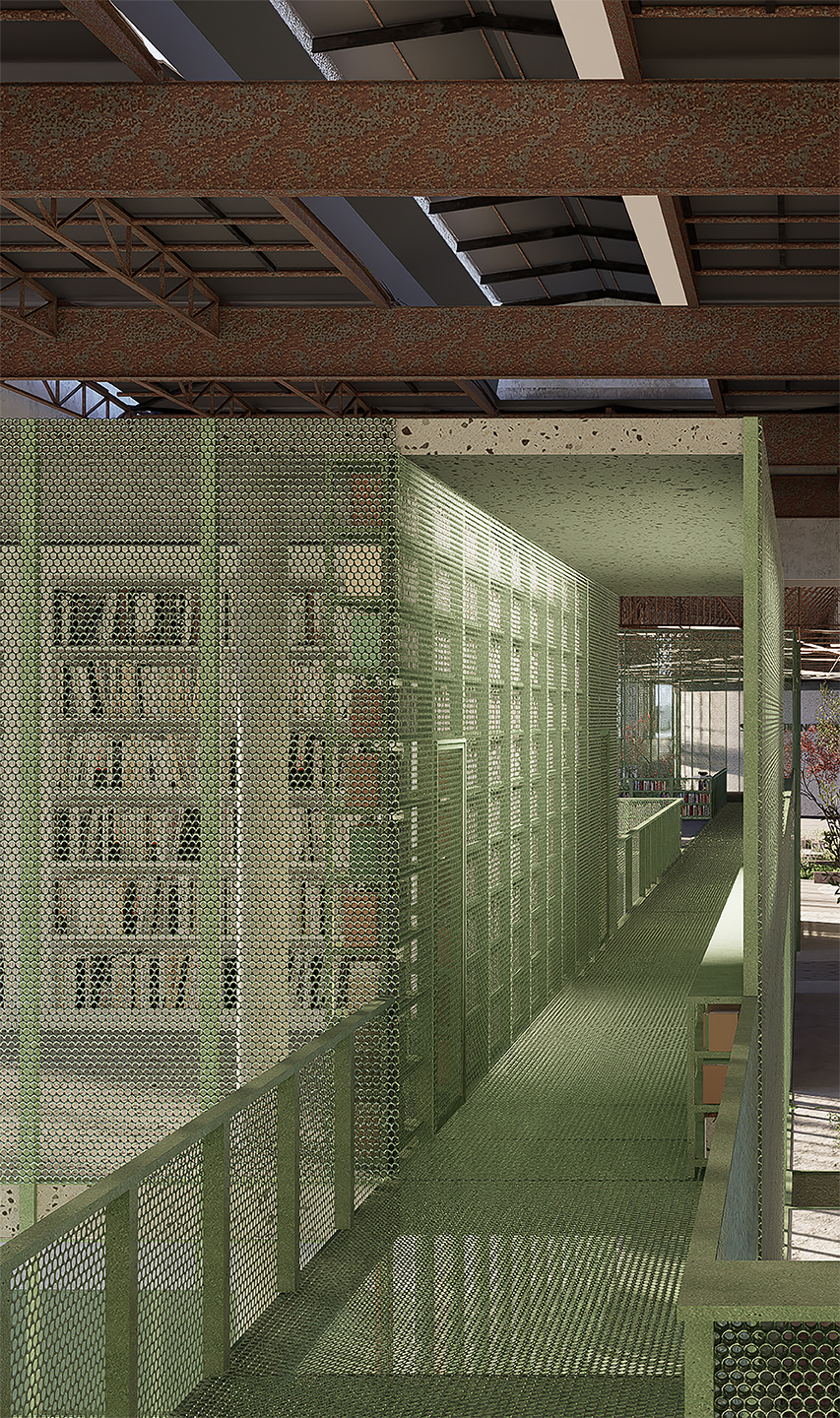
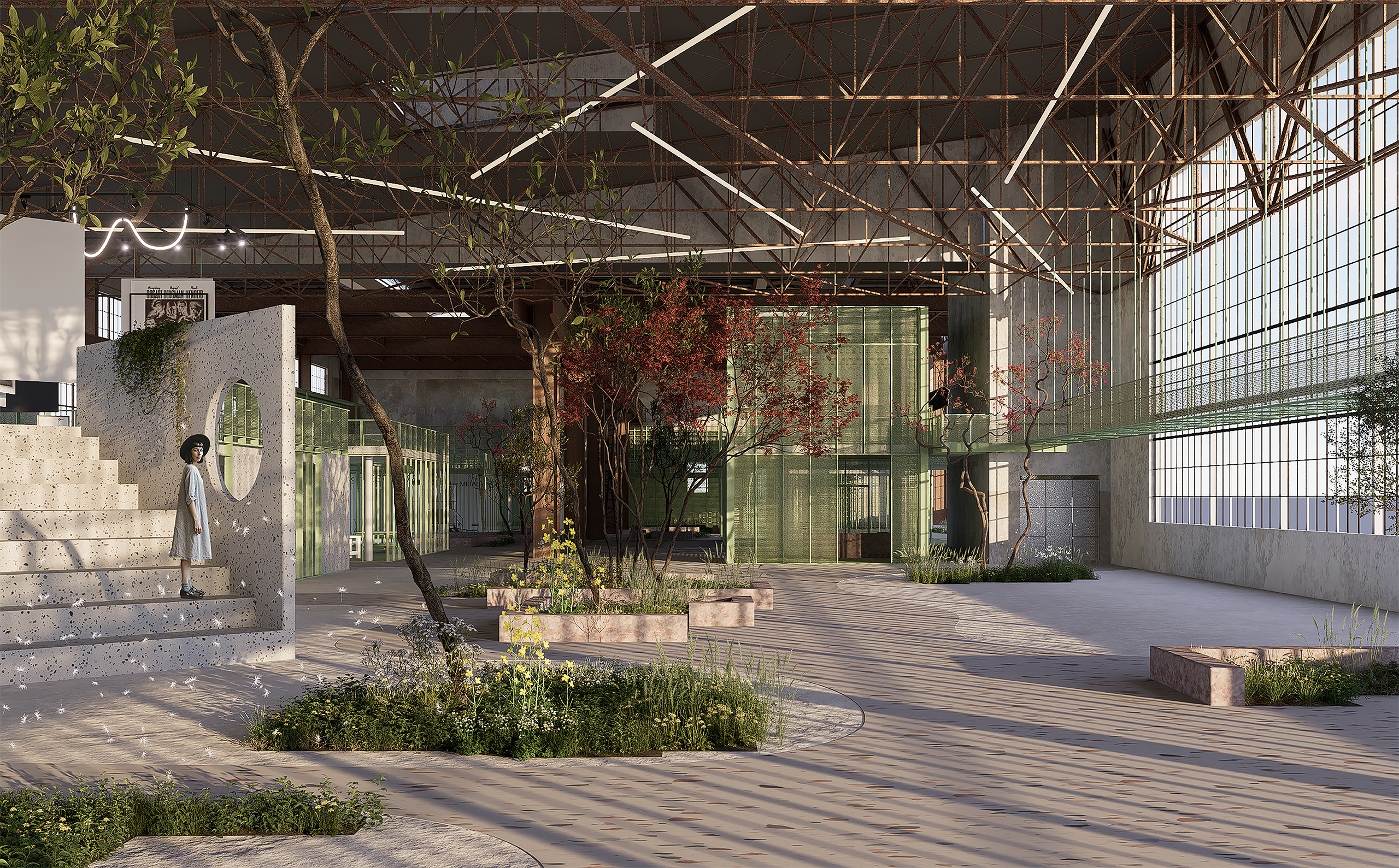
Unlike the mono-functions of the surrounding sites, the mixed-use functions given to the existing and proposed buildings complete the portrait of a diverse center. The proposal embraces heterogeneity, aiming to connect an interweaved community in the center of a newly emerging neighborhood. Education facilities are placed along cultural ones, offices are mixed with residential, all fueled by a food market so badly missed in Sânpetru and Tractoru districts. From kindergartens to high schools, to vocational schools, from temporary accommodation to permanent housing, from small start-up hubs to big office spaces, from public gardens to private outdoor spaces, an animated landscape of beneficial and reciprocal social interactions is being created.
Throughout the whole design process and behind every gesture, there was equanimity in mind. An inclusive space for nature and humans, and in the end, for the human nature.
“Proiectul este dezvoltat în jurul conceptului de transformare a Platformei Rulmentul într-o „comună verde”, subliniind rolul acesteia în dezvoltarea durabilă ulterioară într-o centură publică verde la un nivel regional mai larg, și nu unul limitat la cadrul cartierului. Juriul a apreciat analiza teritorială a platformei din diferite aspecte, cum ar fi sistemul verde, mobilitatea durabilă și accesul.” – Obervațiile juriului
Cu toate ca echipa a participat cu entuziasm la acest concurs, in speranta unui Brasov mai “verde”, proiectul a avut o anvergură deosebita, fiind nevoie de o echipa mai mare si mai mult timp de lucru alocat.
Consider ca echipa a avut un concept solid dar juriul a considerat ca a fost slab pus în aplicare la nivel urban și peisagistic, intervențiile privind Hangarul 6 fiind prea sumare.